26 November 2026
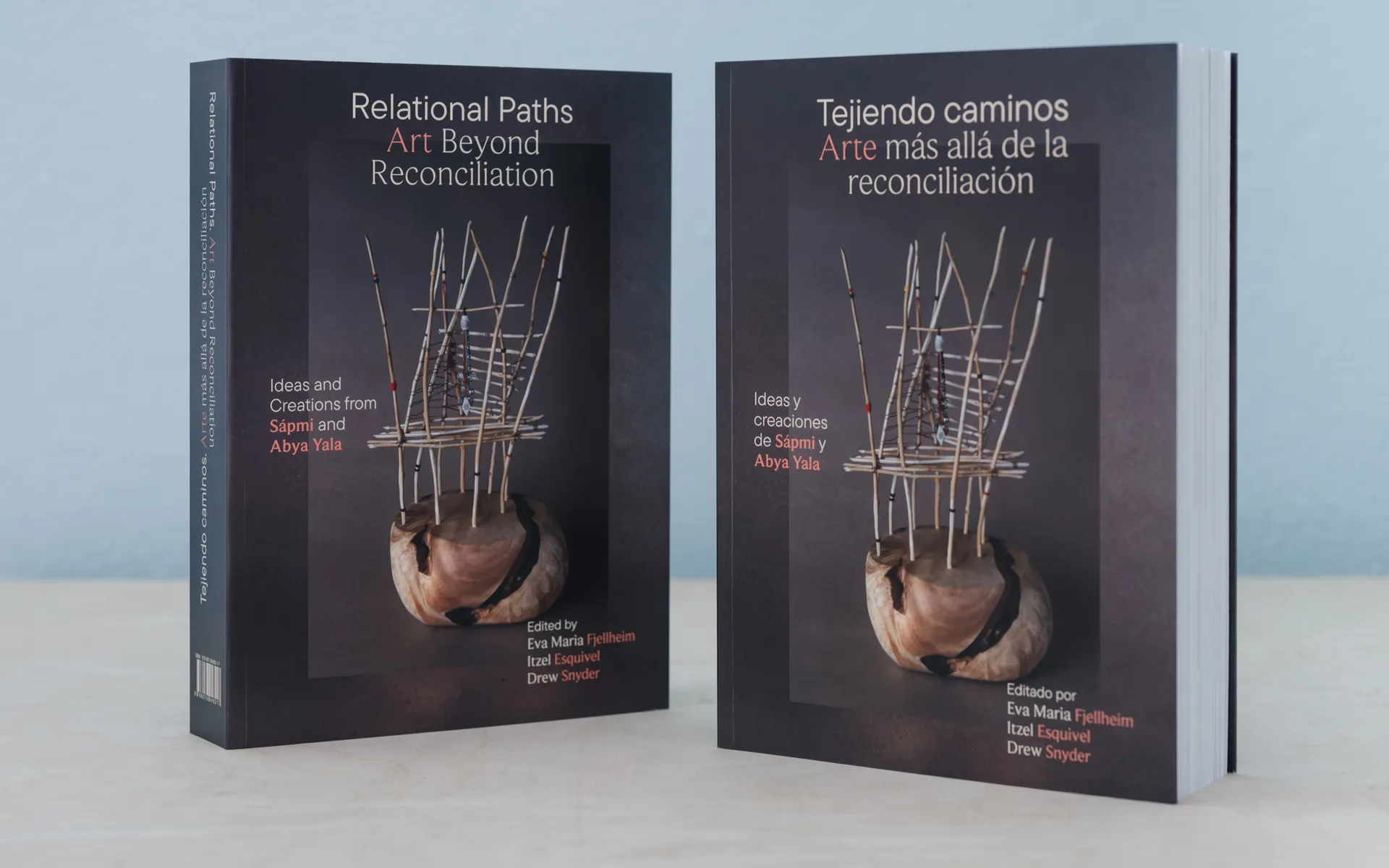
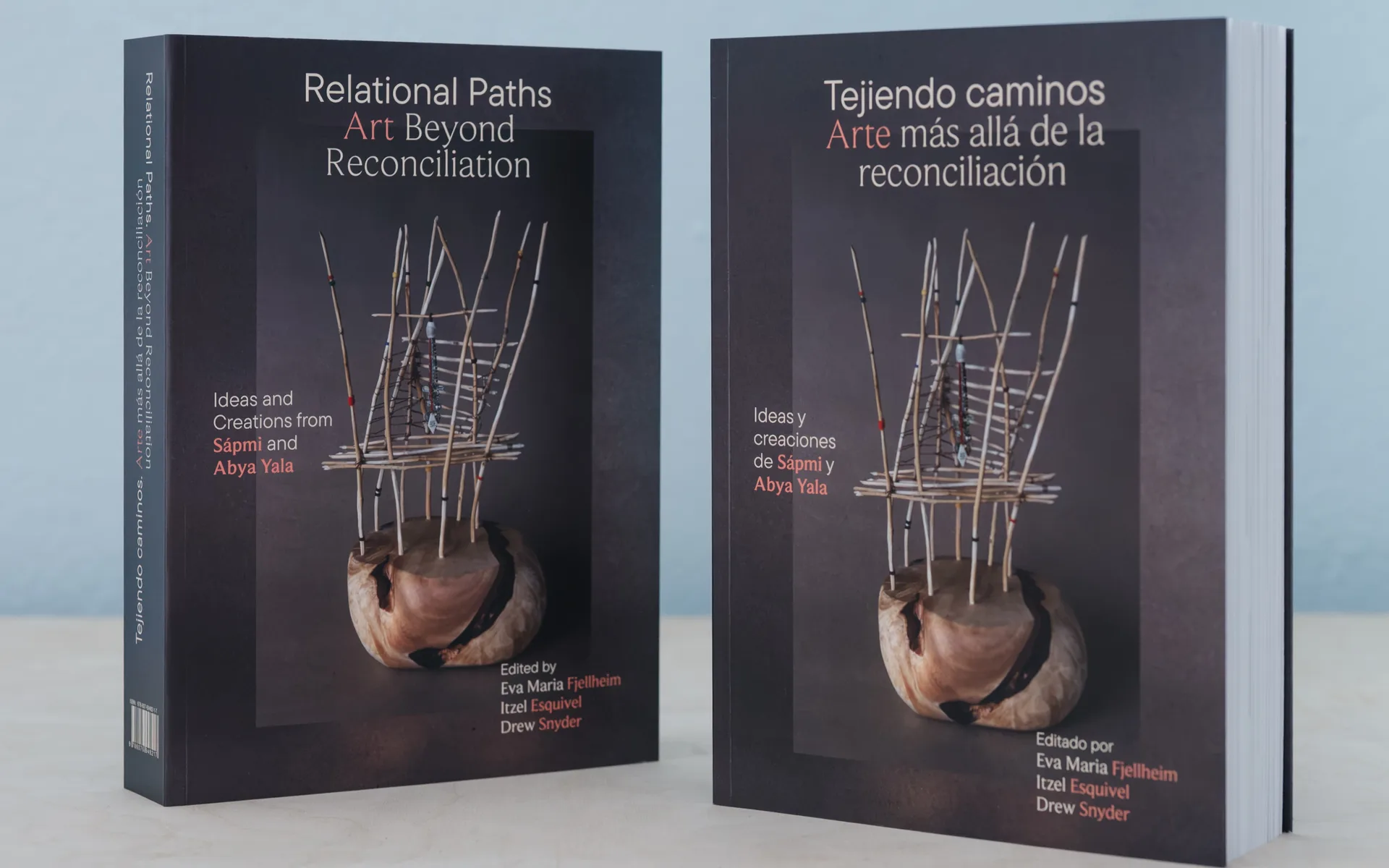
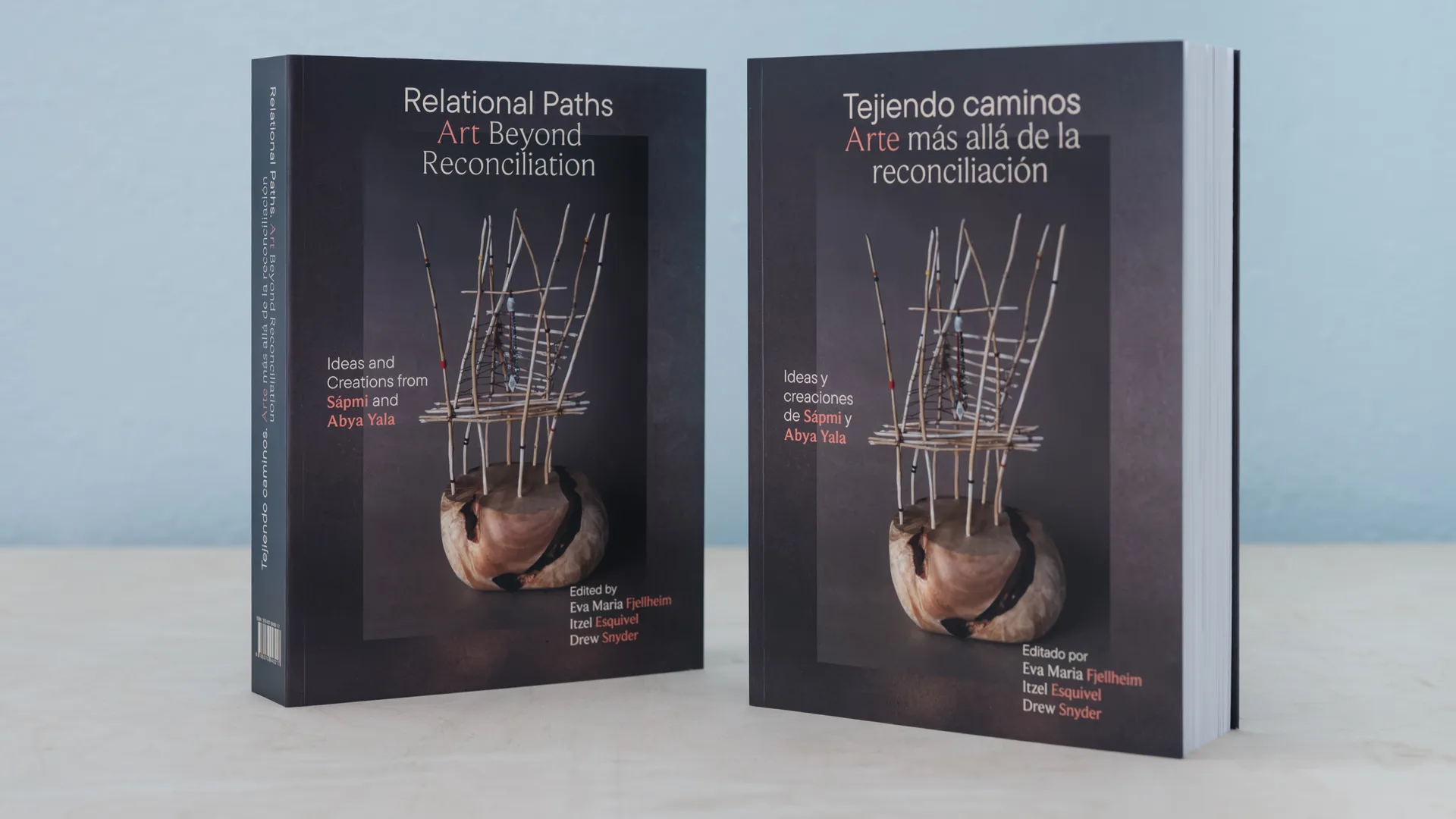
Relational Paths. Art Beyond Reconciliation. Ideas and Creations from Sápmi and Abya Yala is a result of a multi-year programme initiated by OCA – Office for Contemporary Art Norway, KORO – Public Art Norway and Sámiráđđi – the Saami Council.
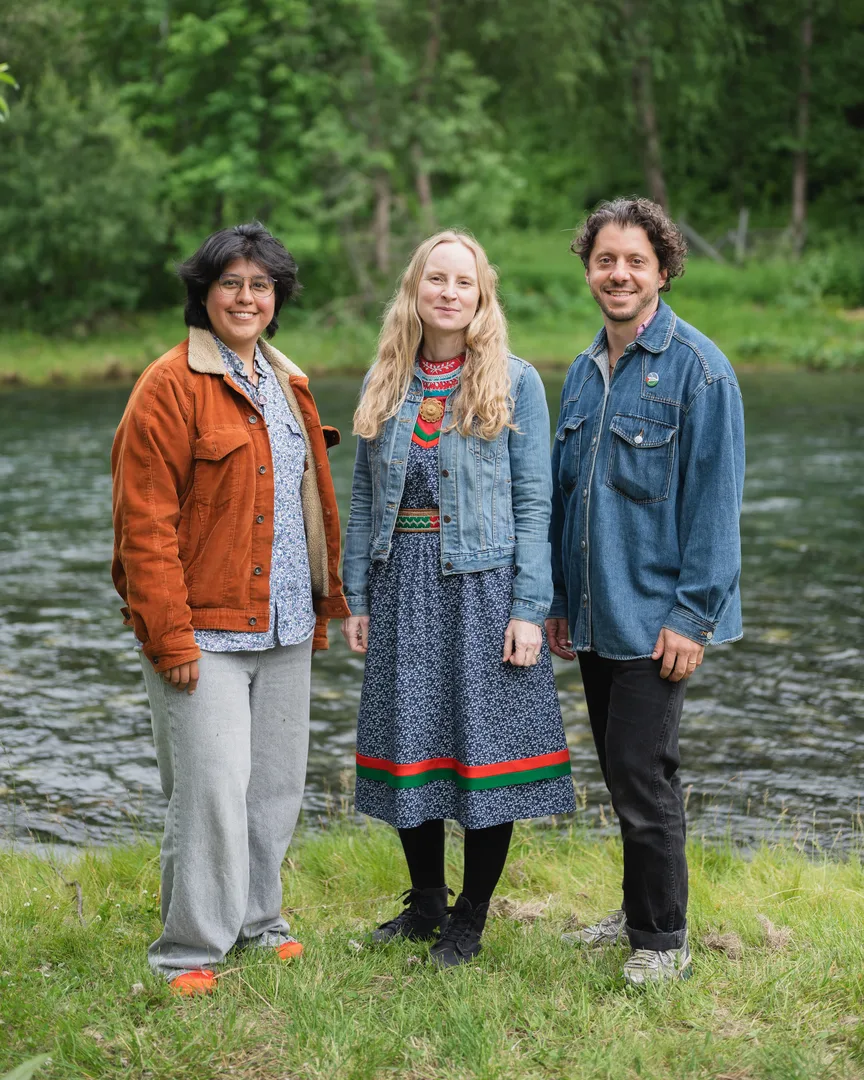
Editors of Relations Paths. From left: Itzel Esquivel, Eva Maria Fjellheim and Drew Snyder
Building on long-standing critiques of “reconciliation” as a reliable construct for confronting destructive colonial legacies on Indigenous communities, this new book proposes various modes of relational forms as a more productive framework for acknowledging history, confronting the present and considering new reparative futures. The collaboration and publication were prompted by but have no formal connection to the Norwegian Parliament’s establishment of a Truth and Reconciliation Commission in 2018.
This publication explores how art, justice, and reconciliation can be understood through relationality. How Sámi and other Indigenous artists and intellectuals challenge, redefine and reject state-centred premises and processes of Truth and Reconciliation, but more importantly, propose ideas and creations centred in their own worldviews. It aims to build bridges and solidarity between Indigenous territories, communities and peoples, to encourage accountability among allies and institutions, and to mend relations with the non-human landscape.
—The editors of Relational Paths
OCA, KORO and the Saami Council present three events in collaboration with partners from Sápmi and Abya Yala.
‘Alternative Ways of Organising’
Riddu Riđđu Festivála
10 – 11 July
Olmmáivággi, Sápmi
In July, OCA arranged a two-day programme titled ‘Alternative Ways of Organising’ at Riddu Riđđu Festivála (Olmmáivággi, Sápmi). The programme included book presentation, film screening, workshops and conversations that brought to life key concepts of the publication for the festival audience. Colectivo Cherani, the political and artistic initiative organised by an intergenerational group, were represented in the four-day programme by Bethel Cucué, Giovanni Guerrero, Francisco Huaroco and Alain Silva; and Sámi artist Márjá Karlsen who partnered with Lara Okafor for open workshops.
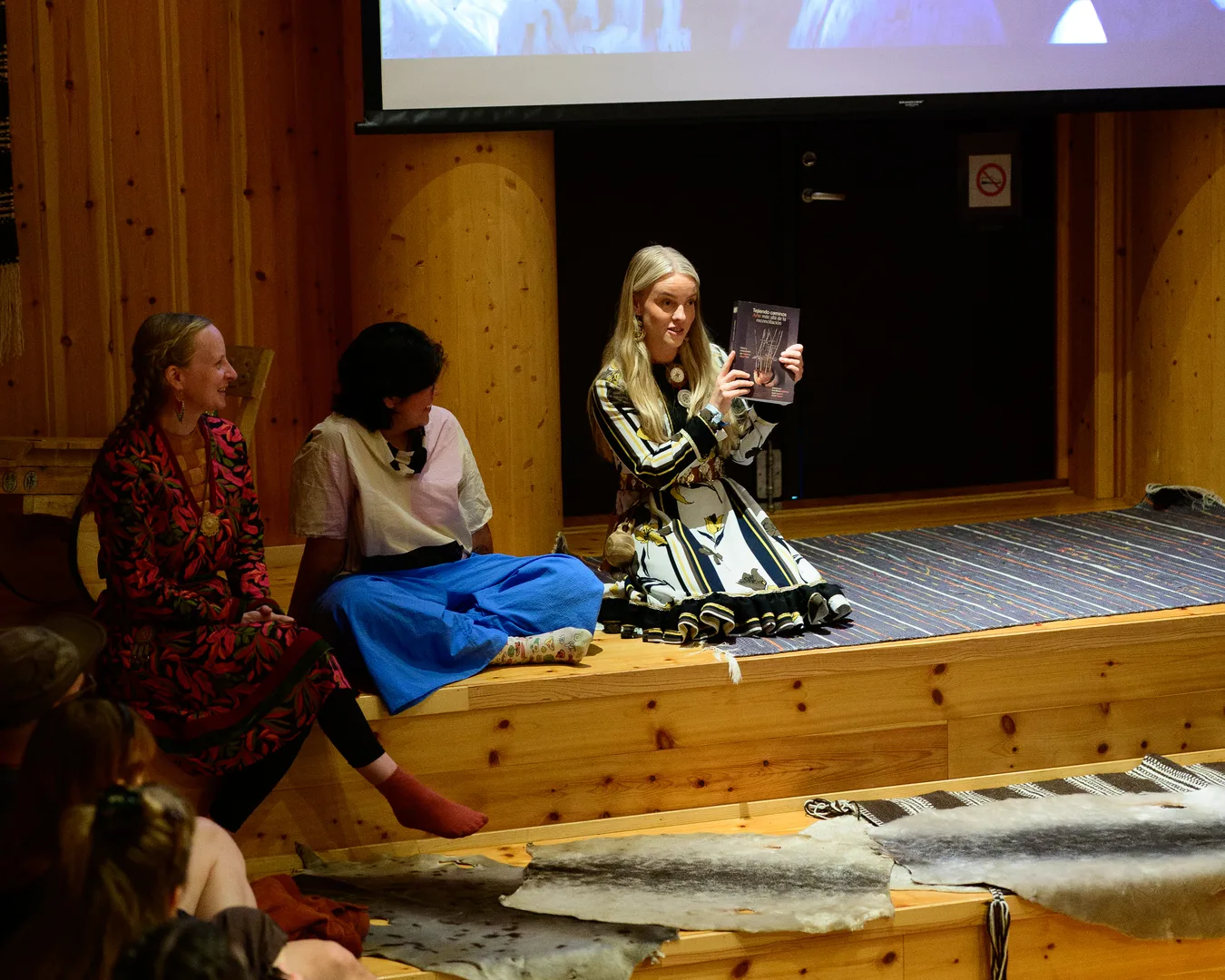
Riddu Riđđu Festivála director Sajje Solbakk presenting Relational Paths
Oslo Launch Event
Samisk Hus
September 23
10:30 – 14:00
Oslo, Norway
In September, KORO hosted the Oslo launch event at Samisk Hus, bringing together contributors to the book, including renowned Sámi artist Britta Marakatt-Labba, for a presentation of the project, which will focus on art and public space. There will also be conversations around the Norwegian institutional and cultural field’s postures, responsibilities and possibilities in the wake of the delivery of the Truth and Reconciliation Commission’s report in 2023; using the relational proposition central to the research as a prompt for looking beyond what scholar Michelle Daigle has termed the “spectacle of reconciliation.”
Mexico City launch event
Museo Universitario Arte Contemporáneo
November 26
12:00 – 18:30
Mexico City, Mexico
For the launch event, co-editors Eva Maria Fjellheim and Itzel Esquivel, along with MUAC’s Deputy Director of Public Program, Julio García Murillo, present a day of conversation, poetry and performance; centred on concepts embedded in indigenous and Afro-diasporic cosmovisions central to the publication. Eva Maria Fjellheim, Itzel Esquivel and Julio García Murillo are available for interviews from mid-November onwards.
Starting with the p’urhépecha concept xanharisï, which means “walking together, making community”, Bethel Cucué and Alain Silva (Colectivo Cherani) share their understanding of the concept; where art becomes more communal as the community redefines its political and spiritual horizon.
Together with Cucué and Huaroco, Joyce Rivas will reflect on parallels between xanharisï and the concept of juntanzas, a term developed and widely used by Black, Afro-Colombian, Raizal, and Maroon communities to name collective practices for organising encounters, conversations, work, and decision-making through reciprocity, care and community-building.
Tajëëw Díaz-Robles will walk the audience through the mixe concept of jojtkuj’äjtë’n, which means having your guts centred and in equilibrium, as restoring equilibrium is key to the Mixe understanding of a ‘good living’. In conversation with Díaz-Robles, Mayan poet Rosa Chávez will reflect on tools and strategies to confront and discuss processes of Truth and Reconciliation in different geographies, with Mapuche poet Daniela Catrileo contributing through a recorded poetry lecture.
In Sámi philosophy and worldview, dåajmijes vuekie means the beauty of an artefact does not exist without its practical, ethical, and collective function. In this sense, beauty values the knowledge, skills and techniques involved in the process of creation, not simply its superficial appearance. From this concept, Southern Saami scholar Eva Maria Fjellheim and Ayutla Mixe linguist Yásnaya Elena Gil will reflect on ways in which indigenous worldviews challenge normative systems, and how such views offer a path for a more relational way of living.
Contributors: Christina Hætta, Rosa Chávez, Yásnaya Elena Gil and Eva Maria Fjellheim, Máret Ánne Sara, Colectivo Cherani by Alain Silva, Kissel Bravo Hernández and Bernardo Núñez; Pauliina Feodoroff, Joyce Rivas, Frederik Prost and Inga Wiktoria Påve, Ana Braconnier De León and Juan Esteban Calderón, Anders Sunna, Daniela Catrileo, Joar Nango, Britta Marakkat-Labba, Geir Tore Holm, Drew Snyder and Itzel Esquivel.
Ed.: Eva Maria Fjellheim, Itzel Esquivel and Drew Snyder
Design by Árvu
Publishers: OCA – Office for Contemporary Art Norway, KORO – Public Art Norway, Sámiráđđi – Saami Council and Temblores Publicaciones.