For many, libraries are associated with power structures that are visible in the built environment or subversive with supposed neutral frameworks of knowledge. In this programme, we introduce concepts that push back against problematic hierarchies embedded within conventional collections, classification and information systems. In the age of Big Data and AI, this approach includes the digital realm, as we confront algorithmic ahistoricity and distortion, and highlight decanonising digital methodologies and re-indigenisation of technology. We centre counter-hegemonic actions that turn resistance into organized political consciousness. This edition is intended to incite critical historical analysis to facilitate alternative narratives of knowing and being. Understanding history as something unfinished and dynamic, that allows us to consciously transform our realities and not accept it as a fixed fate.
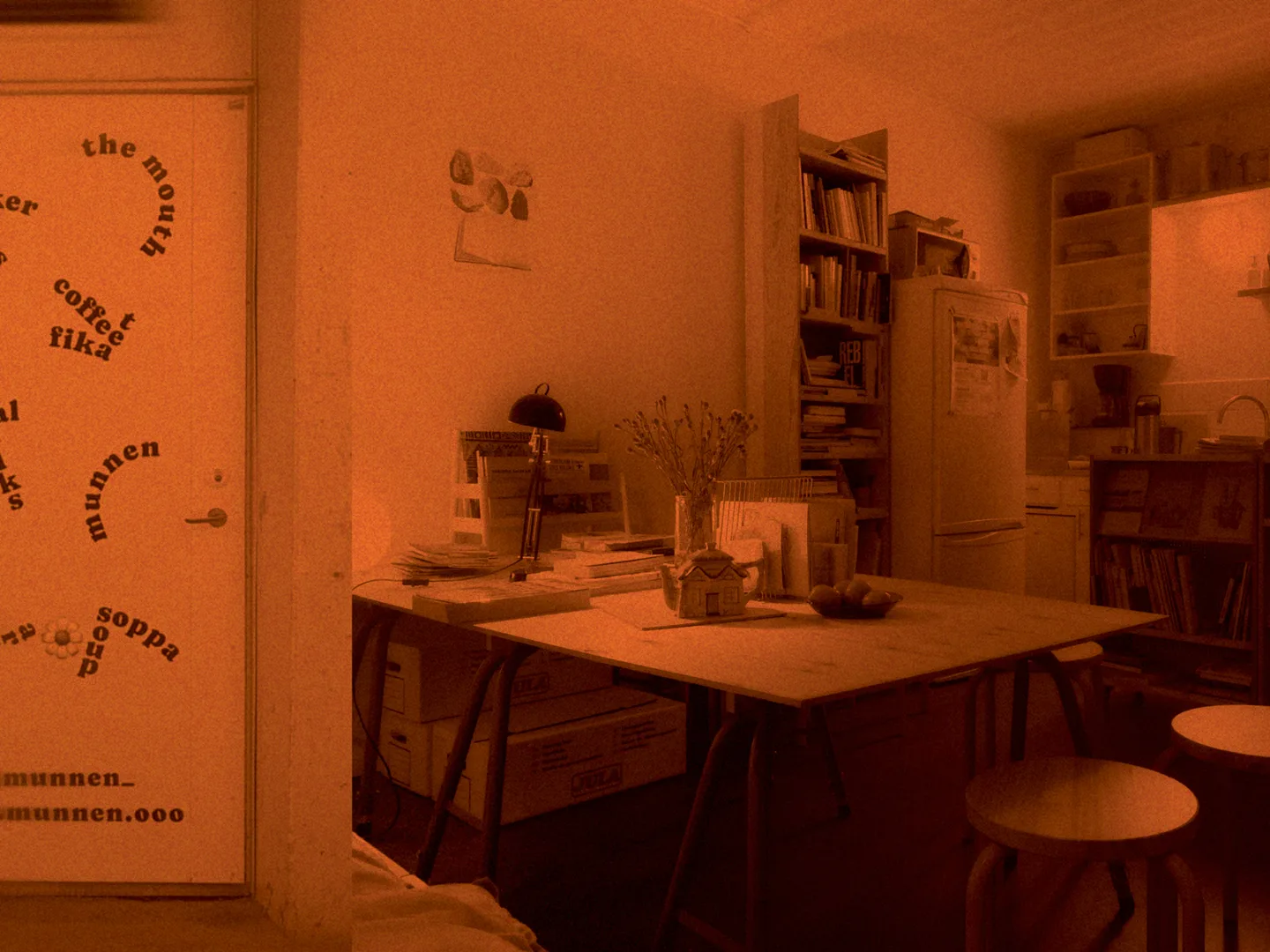
We have invited Contemporary And (C&) to install a selection of their mobile reading room the C & Center of Unfinished Business, at OCA’s library, curated by Ethel-Ruth Tawe, the Editor-in-Chief at C& Magazine. The reading room explores the countless ways colonialism's unfinished business continues to reverberate today. In a world where our relations are increasingly mediated through the lens of technology, the newest installation at the OCA Library seeks to probe and decode entanglements between digitality, coloniality, indigeneity and Blackness.
The reading room, titled counter_programming, leads with the prompts: How can hybrid libraries defy algorithmic logics of surveillance and classification? How might they offer forms of restitution by troubling static views of data and time? These questions are engaged through a curated collection of books, sounds, games, citations, and most notably a C& Cyclopedia station. Beyond a search tool, the C& Cyclopedia is an expansive digital knowledge platform mapping new epistemologies, rooted in multiplicity, unfinished stories, and transformative connections. Excerpts drawn from its online tag 'Conscious Codes' punctuate the physical space as an enactment of the Cyclopedia's own rethinking of taxonomies and archival resurfacing techniques. The binaries of physical vs digital, speculative vs non-fiction, social vs parasocial are collapsed and complicated here. The reading room becomes a testing ground for experimentation, in-person activations, and listening sessions through the materials and encounters it hosts.
During the event on the 26th, Ethel will facilitate an open gaming and listening session with selected materials from the reading room. One being Warpmode: a conceptual card game and thought experiment created by artist Jazsalyn
to stimulate conversations and shift accepted reality through black Metatheories. In the game, players draw cards and respond to existential prompts to reconfigure Black social and theoretical frameworks.
To ground in a prevailing example of critical pedagogy and reflective action we are joined by Inem Richardson, a cultural worker and educator from the Thomas Sankara Center for African Liberation and Unity in Burkina Faso and Niger. By combining historical research with the present, Inem’s work explores what alternatives could be possible for the future. She will lead us through the current anti-imperialist struggles in Burkina Faso and the broader Sahel region as well draw on the importance of knowledge dissemination as counter-hegemonic act against dominant and distorted consensus.
As society increasingly becomes acquiescent towards generative AI, techno-chauvinism and informed by algorithmic narratives, we turn our attention towards Afropresentism as a tool to re-indigenize technology. Coined by Neema Githere in 2017, Afropresentism is a “a genre fusing archival, documentary, and fine arts on and through new media in the expression of an Afrofuturist lived reality”. During the event Neema Githere will transact a performance lecture evolving permutations of their essay “Afropresentism: Quotidien Rituals for Quotidien Wounds” to be published in Bloomsbury UK’s “Black Feminist Theories: Transnational Perspectives” textbook (2026). In the essay, Githere emphasizes that colonialism itself can be understood as a technology; or rather a sum of technologies. They propose Afropresentism as an indigenous technology of repair, re-memory and re-pacing.
On the Sunday 27th
the OCA Library will be open to the public so you can explore the C & Center of Unfinished Business installation on your own.